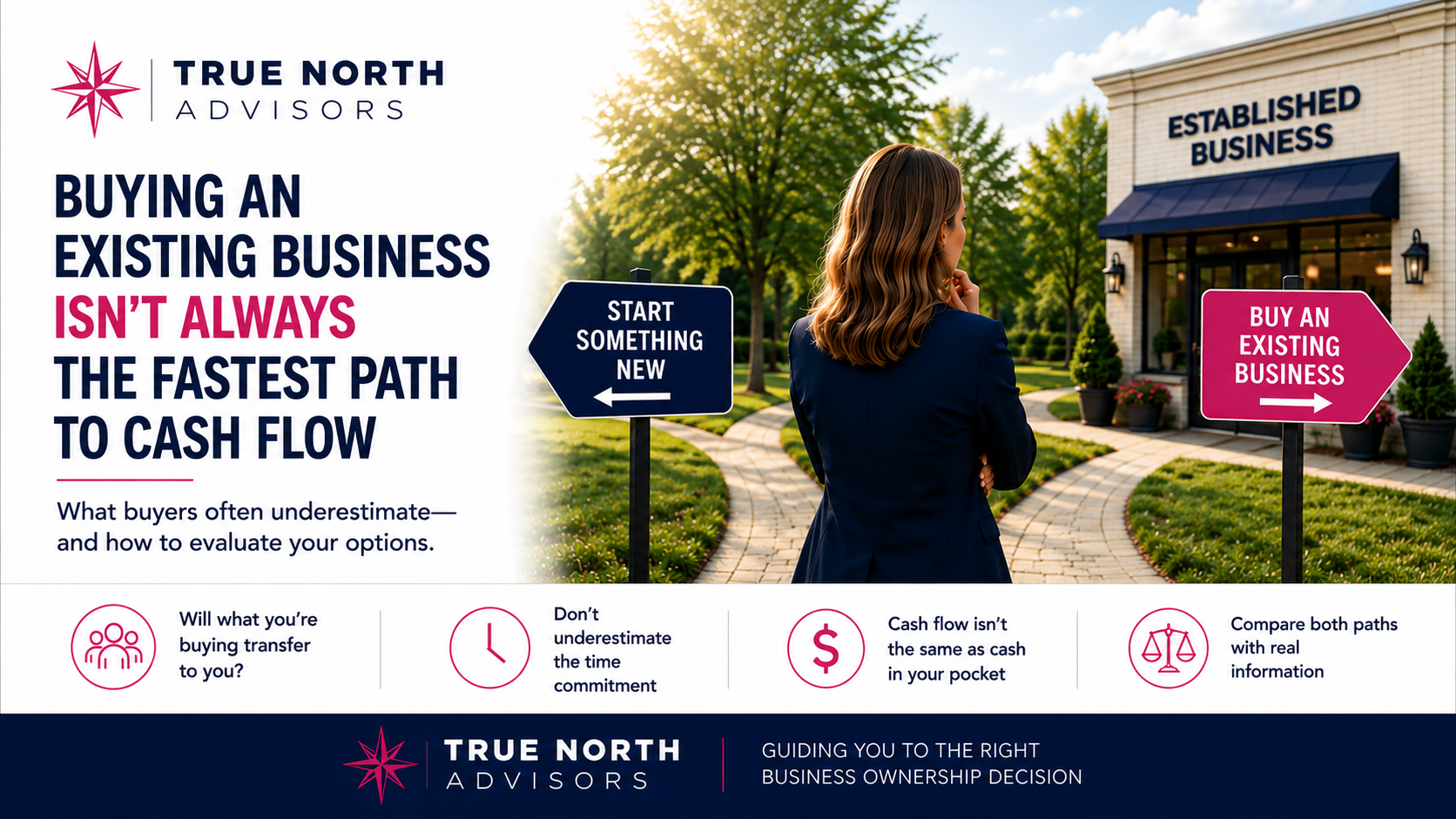
Buying an Existing Business Isn't Always the Fastest Path to Cash Flow
There’s a reason buying an existing business is appealing.
The business already has customers and revenue is coming in. Employees are trained, and maybe there’s even a manager overseeing the day-to-day operations.
It can feel like a faster, easier path to cash flow than starting from scratch. Sometimes it is. But there are a few things I think buyers underestimate.
Will what you’re buying transfer to you?
An established customer base has value. But take a closer look at why those customers keep coming back.
Are they loyal to the business? Or are they loyal to the owner who spent years building relationships with them? Is the reputation really with the business, or with the person running it?
The same goes for employees. Having a great manager in place can make a business much more attractive. But what happens if that manager leaves three months after you take over? What if they’re a family member or close friend of the seller and have no real reason to stay?
You want to understand these things before you buy. If customers leave when the owner does, that changes the value of the cash flow you thought you were buying.
Don’t underestimate the time commitment
I think this is another area buyers can underestimate.
Even with a good team and manager, you still need to learn the business. You need to build trust with employees and customers. You need to understand how things actually get done and what makes your best employees good at their jobs.
At some point, someone will leave. Or hopefully, you’ll grow and need to hire. Either way, you need enough experience in the business to know who you’re looking for.
I’d plan for the first six months to be pretty time intensive.
This is especially important if you’re keeping your full-time job. If you work from 8 to 5 and those are also the business’s core operating hours, think carefully about how you’re going to manage both.
Don’t make the mistake of assuming revenue on day one means passive income on day one.
Cash flow isn’t the same as cash in your pocket
There’s also the financial side of the transition.
If you financed the purchase, you now have debt payments the previous owner may not have had. You may want to spend more on marketing, hire additional employees, replace equipment, or make other investments to grow the business.
So don’t assume your cash needs end with the down payment and closing costs. How much money will you want available after closing to cover debt, run the business, and make the investments you think it needs?
Compare both paths with real information
I help people evaluate resales, and the right existing business can be a great opportunity. But if you’re focused on finding a resale, I also think it’s worth exploring what starting a new franchise territory would look like while you continue your search.
Go through discovery with a franchise or two. Understand the investment and working capital requirements. Talk to franchisees who started from zero and ask what it really took to build their customers, team, and revenue.
Now you have something real to compare with the resales you’re considering.
You may decide paying more for an established business and existing cash flow makes sense. Or you may decide you’d rather invest less upfront and build something yourself.
There isn’t one right answer. But don’t assume buying an existing business is the faster or easier path until you’ve taken a good look at both.
8/20/2026 1:28:02 PM